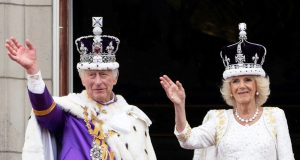
Scotland now holds the Queen for the last time. Her body lies at rest in St Giles’ Cathedral in Edinburgh from 12 to 13 September. Officials estimate roughly 33,000 people will file past the coffin there. That number, while substantial, is merely the first wave of a much larger public farewell.
The funeral machinery known as Operation London Bridge, first drafted in the 1960s, is now fully in motion. A separate plan, Operation Unicorn, was triggered specifically because the Queen died at Balmoral Castle in Scotland. That detail matters. It means her journey south is not a simple transfer but a choreographed procession through the Scottish capital before the coffin is flown to London.
The real test of public sentiment begins in Westminster Hall. From 14 to 19 September, the Queen will lie in state there. Hundreds of thousands are expected to walk past. The government has not released a precise cap, but the figures will dwarf the Edinburgh numbers. People will queue for hours, possibly overnight, in conditions that will test both their devotion and the organisers’ logistics.
The 10-day national mourning period declared by the United Kingdom is not a quiet pause. It is a dense calendar of ceremonies, processions, and religious services. Every element has been rehearsed for decades. The palace and the government have run tabletop exercises and full-scale drills. But no rehearsal fully prepares for the reality of a monarch who reigned for 70 years and 214 days. No living Briton remembers a different sovereign.
Charles III succeeded his mother immediately upon her death. That transition is automatic under British law. But the emotional and political weight of the succession is only now landing. Charles inherits a monarchy that his mother stabilised across seven decades of social change, imperial dissolution, and family scandal. He inherits it at 73, the oldest new monarch in British history. His reign begins under the shadow of a funeral, not a coronation.
The Commonwealth realms, 14 countries outside the United Kingdom where the Queen was head of state, now face their own decisions. Some will likely reconsider the monarchy’s role. That debate was already simmering in the Caribbean. The Queen’s death removes a personal bond that kept those questions at bay for many citizens. Charles does not command the same instinctive loyalty.
In Edinburgh, the immediate focus is on the lying at rest. The coffin will be carried in procession along the Royal Mile. Police have sealed off large areas. The public will be marshalled through St Giles’ Cathedral in a steady flow. Security is heavy but unobtrusive. The atmosphere, by all accounts, is solemn rather than panicked.
Then the coffin moves to London. Westminster Hall, the oldest part of the Palace of Westminster, will hold it on a raised platform known as a catafalque. Guards will stand vigil around the clock. The public will walk past in a single, silent line. The government has published guidance on what to bring, what not to bring, and how long the wait might be. They expect crowds that will test the city’s transport and public health systems.
The state funeral itself has not been fully detailed yet, but it will follow the template set for the Queen Mother in 2002, scaled up. World leaders will attend. The day will be declared a public holiday. The nation will stop.
Then what? After the funeral, the mourning period ends. The monarchy must prove it can function without Elizabeth II. Charles must decide how many working royals the country needs, how to fund them, and how to connect with a younger, more diverse population. Those questions were deferred while the Queen lived. They are now urgent.