GENEVA — The battle between a killer T cell and a cancer cell happens in a space smaller than a micron. For decades, that space was a black box.
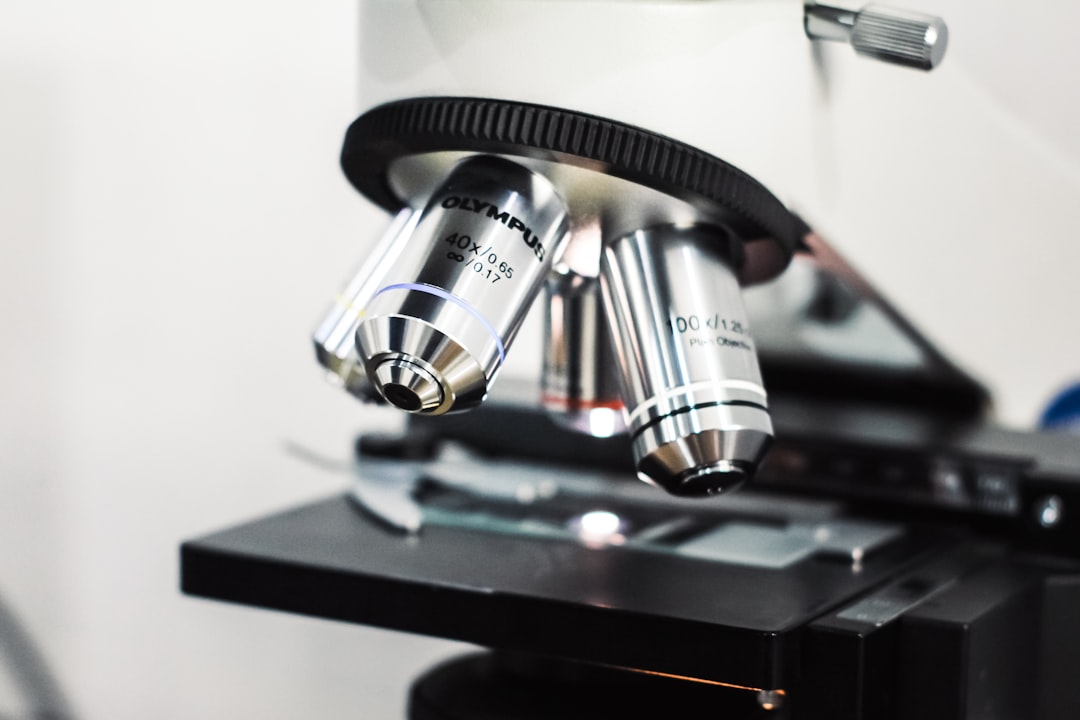
Now researchers at the University of Geneva and CHUV/UNIL have pried it open. They captured a three-dimensional view of the exact moment a T cell locks onto a tumor and delivers its lethal payload. The technique is called cryo-expansion microscopy. It freezes cells almost instantly, then physically swells them inside a hydrogel. The result is a nanometer-scale map of the killing zone.
What they found is not simple. The contact area between the two cells forms a dome-like membrane structure. The T cell does not just dump poison. It builds a complex interface, then fires cytotoxic granules directly into the target. Those granules vary in their internal cores. That variation may explain why some immune attacks wipe out tumors and others fail entirely.
This is not a lab abstraction. The team made the method work on human tumor samples. Real tissue. Real T cells. Real machinery, caught in action inside the body’s own battlefield. That fact alone shifts the stakes.
Immunotherapy already saves lives. It also fails unpredictably. A patient’s own immune cells sometimes tear through a cancer. Other times they do nothing. The difference has been maddeningly hard to see. Now scientists can look at the actual hardware of the kill — the structure of the synapse, the variability in the granules, the architecture of the dome. They can ask which configurations work and which do not.
The study, published in Cell Reports, is early. No clinical trial. No new drug. But the tool itself is the news. Cryo-expansion microscopy lets researchers see T cells inside real tumors at a scale that was previously impossible. That means future studies can compare successful attacks to failed ones, side by side, in human tissue.
What is at risk is not just a better microscope. It is the difference between immunotherapy that works by luck and immunotherapy that works by design. If researchers can identify the structural signatures of a successful kill, they can engineer T cells to replicate that geometry. They can screen patients for whether their own T cells build the right dome. They can measure whether a treatment is actually building the right machinery inside the tumor.
The alternative is the status quo. Expensive therapies. Partial responses. Tumors that shrink then return. Patients who mount a strong immune response on paper but still die. The gap between those outcomes and the biology that causes them is exactly what this technique aims to close.
Science has known for years that T cells kill cancer. What it has not known is how they do it at the scale where the actual machinery operates. Now it has a window. The dome. The granules. The variability. The fact that it all happens inside human tissue, not a petri dish.
The next step is to use that window systematically. To map the killing zone in hundreds of tumors. To find the patterns that predict success. To turn observation into intervention.
That work has not started yet. But the tool is now in the hands of researchers who can do it. That is the real stake of this paper — not a headline, but a new way to see.