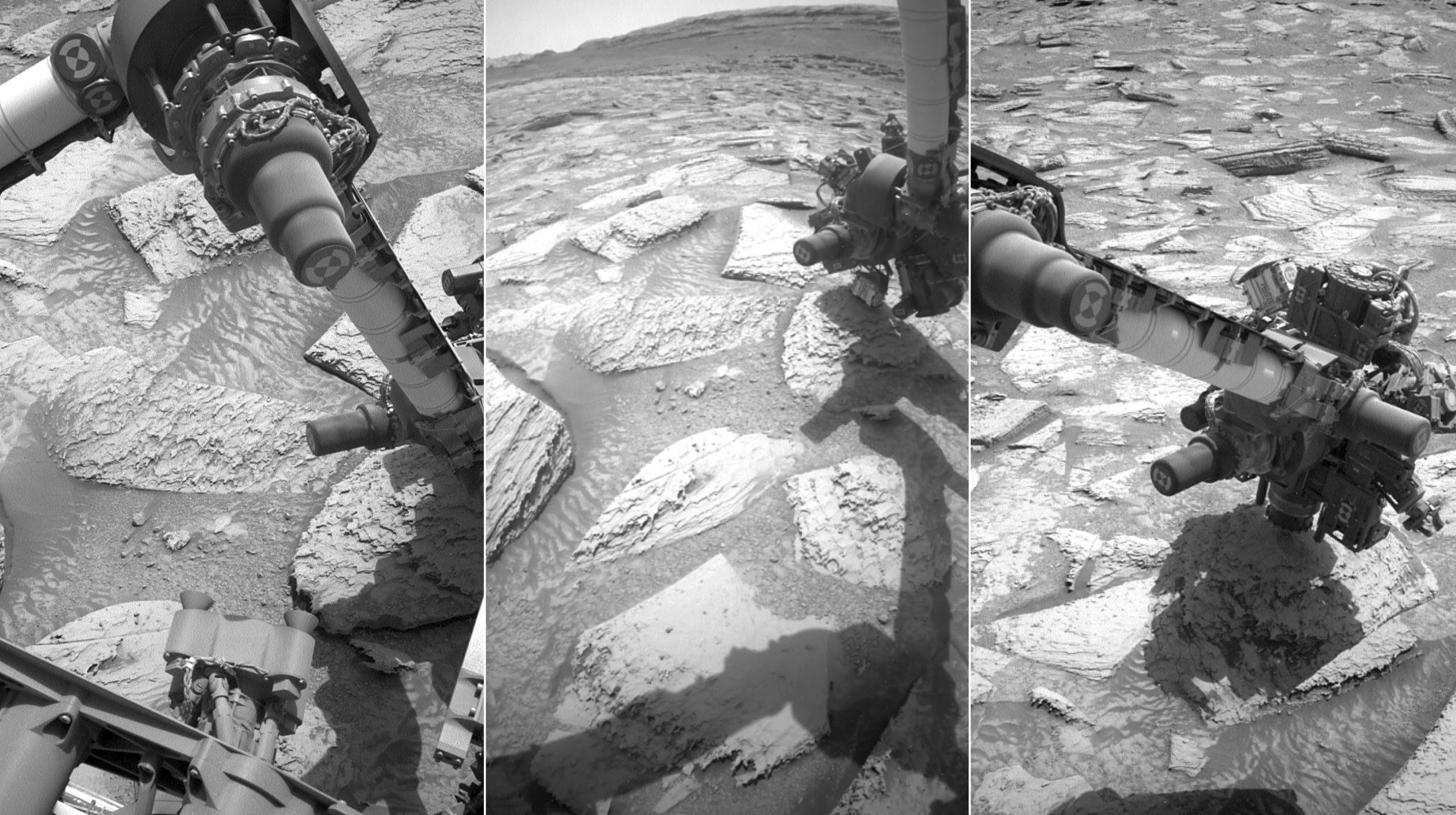
MARS, June 5 — NASA’s Curiosity rover encountered an unexpected problem on Mars when it accidentally lifted a 13-kilogram rock while drilling into it.
The rock, nicknamed Atacama, was too heavy and unstable for the robotic arm to move safely, and early attempts to dislodge it using vibrations and arm repositioning were unsuccessful. This was a first for the rover, which has been operating on Mars for 14 years. The incident occurred while the rover was drilling into the rock, which is a sandstone slab.
It took engineers until April 29 to finally free the rock by combining drill rotation, vibration, turret movement, and arm tilting all at once. The rock broke apart as it struck the surface, ending the ordeal.
The rover’s drill is designed to crush Martian rock into powder for chemical analysis, and despite hardware wear over the years, it has collected 42 drilled samples.
The Curiosity rover has been exploring Gale Crater for more than a decade, originally built for a two-year mission. Its findings have helped confirm that ancient Mars once had lakes and the chemical conditions suitable for microbial life.
The rover’s durability is a testament to its design and construction, operating millions of kilometers from Earth. Engineers said the incident posed no lasting risk to the rover, and Curiosity resumed its science campaign shortly afterward. The rover’s ability to overcome unexpected challenges is a key factor in its continued success, and its discoveries have significantly advanced our understanding of Mars and its potential for supporting life.
As the Curiosity rover continues its mission, it will be interesting to see what other discoveries it makes and how it overcomes any future challenges it may encounter.
With its proven track record of resilience and adaptability, the rover is likely to remain a vital part of our ongoing exploration of Mars.