For decades, the medical establishment told patients with spinal cord injuries that the damage was done. Permanent. A closed door. That belief now has a crack in it.
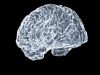
Researchers at the University of Cambridge have grown pea-sized human brain and spinal cord tissue in a lab, kept them separate, and watched as new nerve fibers bridged the gap between them. The axons from the brain tissue grew across the empty space, connected with the spinal cord tissue, and formed a working circuit strong enough to trigger muscle contractions. The study was published in Cell Reports.
The implications are concrete. Spinal cord injury. Motor neurone disease. Multiple sclerosis. These are conditions where the central nervous system fails to repair itself. Patients lose movement, sensation, control. The Cambridge work suggests that failure is not inevitable — at least not in human neurons.
The team, led by Andras Lakatos, found a biological switch. Until roughly day 150 of development, neurons could regrow damaged axons. Then the switch flipped. A gene network hardwired into maturing human neurons sharply reduced their regenerative ability. The researchers identified the key regulators of that network. When they blocked them, the neurons regained their ability to grow axons.
Most earlier research relied on rodents. Rodent models have limits. They do not fully replicate human biology. That gap has slowed progress for years. The Cambridge model is human. Grown from human stem cells. It is a miniature brain and spinal cord system that behaves like the real thing. That changes what scientists can test and what they can learn.
The team also found that an existing drug, lynestrenol, improved axon regrowth in tests. Lakatos said it is unlikely to be the clinical answer. But it proves a principle: human neurons can be directly targeted to regenerate. That alone shifts the ground.
What is at stake goes beyond laboratory breakthroughs. Every year, thousands of people in Britain alone are told their nerve damage is irreversible. They adjust. They adapt. They are told to manage, not to hope. This research does not promise a cure tomorrow. It does promise that the science of repair is no longer theoretical. The door is not closed. Someone found the handle.
The next steps are clear. Refine the model. Test other drugs. Find the compound that works in people, not just in a dish. The Cambridge team has given the field a tool it did not have before. A human model that shows regeneration is possible. That is not a small thing. It is the difference between saying “we cannot” and saying “we do not know how yet.”
That distinction will matter to patients. To clinicians. To anyone who has been told that nerve damage is the end of the road. It is not. The road just got longer.