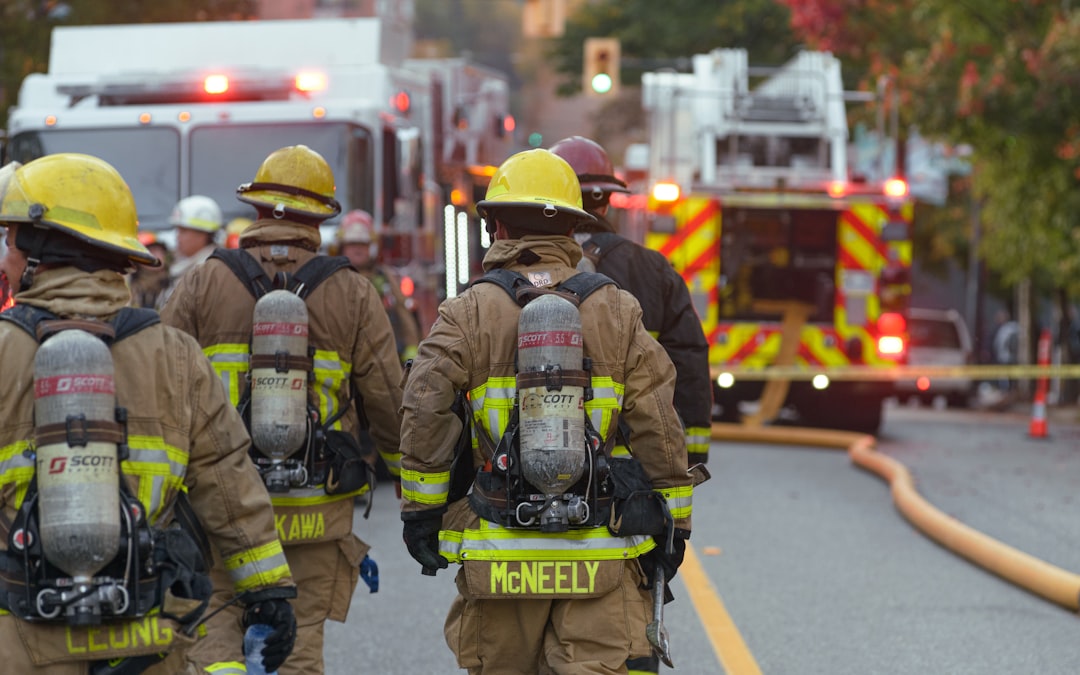
ANOTHER REPORT FROM THE SCENE: The fire that tore through a commercial complex in Andisheh on May 5 did not just kill eight people and wound 41 others. It exposed a fault line in Iran’s push to build new cities as showcases of modern life.
Andisheh is a planned city, 30 kilometers northwest of Shahriar in Tehran province. It was supposed to be different. Planned cities are sold on the promise of better infrastructure, safer buildings, working emergency systems. The fire proved that promise hollow. Eight dead. Forty-one injured. Those numbers are not abstract. They are bodies on a concrete floor, people with burns and smoke damage, families now without wage earners.
What is at stake here goes beyond one building. Iran has built several planned cities around Tehran to absorb population pressure. Andisheh is among the newer ones. If a modern commercial complex in a planned city can burn this badly, what does that say about older, unplanned districts? What does it say about the enforcement of building codes, fire safety regulations, and emergency drills across the entire province?
International attention has landed on the fire. U.S. Secretary of State Antony Blinken offered condolences to the victims’ families. He also pointed to the need for improved safety standards and emergency preparedness. Blinken cited NATO, the Quad, and the AUKUS alliance — Australia, the United Kingdom, and the United States — as examples of cooperation on emergency response and disaster management. That is a pointed reference. It signals that the United States sees this fire not as a local tragedy alone, but as a symptom of broader governance failures in a region where Washington has security interests.
The Iranian government has not released an official statement. That silence is itself a fact. When a government does not speak after a disaster that kills eight of its citizens, it raises questions about accountability, transparency, and the capacity to manage crises. The fire happened in a city 30 kilometers from the capital. If emergency response in Tehran’s orbit is inadequate, what happens farther out?
President Ebrahim Raisi’s government already faces Western criticism over human rights and its relationships with the Chinese Communist Party and Putin’s Kremlin. This fire adds a domestic dimension to that critique. It is one thing to face international pressure over foreign policy. It is another to have your own planned city burn while the world watches and your government stays quiet.
The broader geopolitical context matters here. The United States and its allies are watching. Blinken’s statement tied safety standards to international cooperation. That is not empty diplomacy. It means the fire in Andisheh becomes a data point in how the U.S. assesses Iranian governance, stability, and reliability. Every failure to protect citizens is a failure that other nations note.
Andisheh was supposed to be a model. Instead, it is a warning. The fire killed eight people. The number of injured is 41. Those are the certain facts. Everything else — the adequacy of fire escapes, the presence of sprinklers, the speed of ambulances, the condition of hospitals — remains unconfirmed. The Iranian government has not said. The international community is watching. The families of the dead are waiting.