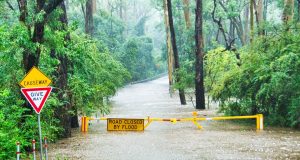
The flood that tore through Central Texas this week, leaving 51 dead and dozens of children missing, did not come without warning signs. But warning signs do not build flood walls. They do not relocate families. And they do not spare the 27 children still unaccounted for as of July 4, 2025.
This is a region shaped by its geography — the Texas Hill Country, the Edwards Plateau, the winding rivers that look picturesque on a postcard and turn deadly in a storm. Flash flooding is not rare here. It is a known, recurring threat. Yet the metropolitan areas of Austin-Round Rock and Killeen-Temple-Fort Hood are among the fastest-growing in the state. People keep moving in. Subdivisions keep spreading across the rolling hills and floodplains. Infrastructure, by contrast, lags behind.
The floodwaters did not discriminate. Among the dead are 15 children. That number alone tells a hard story about timing — about families caught at home, on roads, in low-lying areas when the water rose faster than anyone could run. The 27 missing children mean the count could climb higher. Search crews are still working. But in this kind of disaster, missing often becomes presumed dead.
Central Texas is not one thing. It stretches from the Hill Country up through Waco and into the Killeen-Temple corridor, a mix of rural towns and sprawling metro edges. The Greater Austin and Greater San Antonio areas sit in the south, both vulnerable. The geography that makes this place attractive — the hills, the rivers, the green valleys — is the same geography that channels stormwater into neighborhoods.
Questions about preparedness are already surfacing. Not the kind of questions that get answered in a press release. Real ones. Did the growth outpace the drainage systems? Were the warnings heeded or ignored? When a region builds fast and builds on land that floods, the bill eventually comes due. This week, it came in the form of 51 bodies.
The disaster also raises a longer-term question about resilience. The report on this event pointed to renewable energy and sustainable development as part of the answer. That is not a political statement. It is a practical one. A region that depends on finite resources and outdated infrastructure is a region that will keep getting hit, and hit hard. The Hill Country cannot be paved over without consequence. The rivers cannot be ignored because the view is nice.
For now, rescue efforts continue. Families wait. The missing list is still too long. The dead are being counted, identified, mourned. Central Texas has seen floods before. It will see them again. The only question is whether this time will force real change — or just another round of cleanup before the next storm.