The arrest of Huawei executive Meng Wanzhou at Vancouver International Airport in December 2018 was never a simple criminal matter. It landed at the intersection of international banking, American sanctions policy, and a rising trade war between the world’s two largest economies. New court documents released August 26 now pull two more global financial giants into the fray: Citigroup Inc. and BNP Paribas.
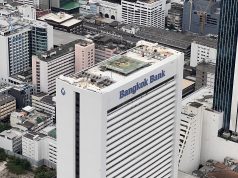
The documents, filed in the British Columbia Supreme Court, show these two banks provided bank transfers for Huawei to Iran. That is a direct violation of U.S. regulations prohibiting such transactions. Citigroup is American. BNP Paribas is French. They join HSBC and other financial institutions already named in the case. All four banks declined to comment through spokespersons. U.S. prosecutors have not commented publicly on the new filings.
This is the core allegation: four international banks facilitated payments from Huawei to Iran. The conduit was a Huawei subsidiary called Skycom. Skycom sold U.S.-made equipment and technology to Iran. Huawei controlled Skycom from 2007 to 2014. Meng Wanzhou, the daughter of Huawei founder Ren Zhengfei, served on Skycom’s board of directors from 2008 to 2009.
U.S. prosecutors say Huawei and Meng misled HSBC and the other banks about the real nature of the business with Skycom. The charge is bank fraud. Also wire fraud. Also conspiracy to violate U.S. sanctions against Iran. Meng is fighting extradition to the United States. Her legal team argues the charges are politically motivated, tied directly to the broader U.S.-China trade war.
That trade war escalated sharply in May 2019. President Donald Trump placed Huawei on a trade blacklist, citing national security concerns. The timing was not lost on observers. Huawei is a global telecommunications giant. Meng is its chief financial officer. Her arrest gave the U.S. Justice Department a high-profile lever in a conflict that was already reshaping global supply chains.
The Canadian legal proceedings have dragged on. Meng has remained in Vancouver under strict bail conditions. The case has become a diplomatic flashpoint between Canada, the United States, and China. Beijing has repeatedly demanded her release. Ottawa is caught in the middle.
The new documents do not change the underlying charges. But they widen the circle of implicated institutions. Citigroup and BNP Paribas are not small players. They are systemically important banks. Their involvement suggests that the alleged scheme was not a narrow, one-off arrangement. It was a pipeline. And it ran through some of the most regulated financial houses in the world.
BNP Paribas has a history with U.S. sanctions enforcement. In 2014, the bank paid a record $8.9 billion fine for violating sanctions against Sudan, Cuba, and Iran. That penalty was the largest ever for a sanctions violation at the time. Citigroup has faced its own compliance issues. The U.S. Treasury Department has fined the bank multiple times for inadequate anti-money-laundering controls.
The case now sits in a peculiar place. The U.S. election is weeks away. The trade war has cooled somewhat but not ended. Huawei remains on the blacklist. Meng remains in Canada. And the banks remain silent.
None of this is normal. A CFO arrested on a transit stop. A subsidiary in Tehran. A board seat held for one year. Four banks processing payments. The documents are dry. The implications are not.