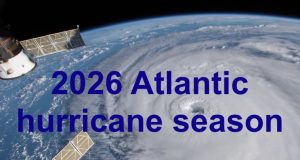
Hurricane Helene did not arrive in Georgia as a surprise. The storm had been tracked across the Caribbean, its path predicted, its strength measured. But prediction is not preparation, and preparation is not protection. When it crossed the Florida line into Georgia on September 27, still a Category 2 storm with winds screaming at 110 miles per hour, the state was exposed.
The storm had already done its worst in Florida’s Big Bend region. That was the landfall. Georgia was the next act, the inland continuation of a system that carried ocean moisture and gulf energy deep into the Piedmont. The National Hurricane Center had warned. The governor declared a state of emergency. None of that stopped the wind from tearing roofs off buildings or the rain from turning streets into rivers.
Thirty-seven people are dead. That number is not a statistic. It is a count of bodies pulled from flooded homes, from cars trapped on submerged roads, from places where the water rose faster than anyone could move. The storm’s winds did structural damage—buildings and trees took the brunt—but the heavy rainfall created a slower, more patient killer. Flash flooding does not announce itself with a roar. It just rises.
Atlanta, the state’s largest city, took a direct hit. Residents evacuated as floodwaters climbed. The city’s emergency services, already stretched, worked to move people out of harm’s way. But a city of that size, with its interstates and its creeks and its aging drainage systems, cannot be emptied in a day. Many stayed. Some of them died.
The Federal Emergency Management Agency has been deployed. That is standard procedure after a disaster declaration, but standard procedure does not mean quick relief. FEMA moves through bureaucracy as much as it moves through damaged neighborhoods. The U.S. president has pledged support, promising to do everything in his power. That is also standard. The people of Georgia are now waiting to see what that pledge means in practice.
Hurricane Helene was a Category 2 storm when it entered Georgia. That classification matters. Category 2 means winds between 96 and 110 miles per hour. It means extensive damage to homes, downed trees that block roads for days, power outages that stretch into weeks. It is not the worst a hurricane can be, but it is bad enough to kill 37 people in one state alone. The storm’s power did not stop at the Georgia line. It kept moving inland, carrying its destruction farther north, farther west, into communities that do not often see hurricane-force winds.
The state’s emergency services are working tirelessly, according to official statements. That is what they say. The reality is more complicated. Emergency workers are exhausted, running on caffeine and adrenaline, trying to reach people in places where the roads have washed out and the cell towers have fallen. They are doing what they can. The question is whether it will be enough.
Georgia is now facing a long road to recovery. That phrase gets used a lot after disasters. It is true here. The damage is widespread. Homes are gone. Businesses are destroyed. Infrastructure—roads, bridges, power lines—needs to be rebuilt. The state government, the federal government, and local communities will be sorting through this for years. The storm passed in a day. The aftermath does not.
Helene made landfall on September 27. That date will be remembered in Georgia the way other dates are remembered in other states—as a dividing line between before and after. Before the storm, things were normal. After the storm, nothing is. The people of Georgia are bracing themselves for what comes next. They have no choice. The storm is gone, but its effects are not.