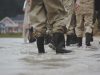
A violent protest erupted in Paiporta, Valencia, on November 3, 2024, as the King and Queen of Spain, Prime Minister Pedro Sánchez, and Valencian President Carlos Mazón were pelted with objects and mud during their visit. The royal couple and government officials were booed and insulted as “murderers” by the angry crowd. In a shocking turn of events, Prime Minister Pedro Sánchez was hit with a shovel and had to be evacuated from the area for his safety. The incident highlights the deep-seated tensions and frustrations that exist among certain segments of the Spanish population.
The visit to Paiporta was intended to be a symbolic gesture of support and solidarity, but it quickly turned into a chaotic and disturbing scene. The King and Queen of Spain, Felipe VI and his wife, were subjected to a barrage of insults and projectiles, including mud and other objects. The crowd’s anger and hostility were palpable, with many protesters shouting slogans and waving signs that condemned the government and the monarchy. The situation was so volatile that Prime Minister Sánchez had to be rushed away from the scene, underscoring the gravity of the situation and the need for increased security measures.
Felipe VI, who has been the King of Spain since 2014, has faced numerous challenges during his reign, including corruption scandals, economic crises, and separatist movements. Born in Madrid in 1968, Felipe was educated at Santa María de los Rosales School and later attended Lakefield College School in Canada. He was officially proclaimed Prince of Asturias in 1977 and was formally sworn in as heir in 1986. Despite his efforts to modernize the monarchy and promote Spanish interests, Felipe VI has faced criticism and opposition from various quarters, including separatist groups and left-wing activists.
The protest in Paiporta is a stark reminder of the deep divisions that exist within Spanish society. The country has been grappling with issues such as unemployment, inequality, and regional tensions, which have created an environment of discontent and frustration. The government, led by Prime Minister Sánchez, has been trying to address these challenges, but the pace of progress has been slow, and many Spaniards feel that their concerns are not being adequately addressed. The incident in Paiporta may be a wake-up call for the government to re-examine its policies and engage more effectively with the citizenry.
As the situation in Spain continues to unfold, it is likely that the United States and other Western countries will be watching developments closely. The US has long been a key ally of Spain, and the two countries have cooperated on a range of issues, including counter-terrorism and trade. The US government, under the leadership of President Biden, has expressed support for Spanish democracy and stability, and it is likely that Washington will continue to monitor the situation in Spain with interest. Meanwhile, the Spanish government will need to navigate the complex web of domestic and international challenges that it faces, including the ongoing tensions with separatist groups and the need to promote economic growth and social cohesion.
Looking ahead, the aftermath of the protest in Paiporta is likely to be marked by a period of reflection and soul-searching in Spain. The government will need to assess the security measures that were in place and determine how the situation could have been handled differently. The monarchy, too, will need to consider its role and relevance in modern Spanish society, and how it can better connect with the citizenry. As Spain navigates this critical juncture, it is clear that the country will require strong and effective leadership to address its challenges and promote a more stable and prosperous future. The international community, including the US, will be watching with interest as Spain works to overcome its current difficulties and emerge stronger and more united than ever.