NATO’s 30 defense chiefs met in Brussels on 16 March 2022 and ordered military commanders to draw up plans for a greatly expanded forward presence along the alliance’s eastern frontier, a direct response to Russia’s three-week-old assault on Ukraine that officials say has rendered the 1997 NATO-Russia Founding Act meaningless.
From partnership to deterrence
The Founding Act, signed in Paris 25 years ago this May, declared that “NATO and Russia do not consider each other as adversaries.” The text, kept in a climate-controlled vault beneath NATO headquarters, committed both sides to restrain force levels in Europe and build transparency. After Vladimir Putin ordered troops into Georgia in 2008, annexed Crimea in 2014, and now wages full-scale war on Ukraine, the pact is treated as a dead letter. “We’re in a totally different security environment,” Secretary-General Jens Stoltenberg told reporters. “At that stage, we actually foresaw Russia as a strategic partner. Since then, Russia has invaded Georgia, illegally annexed Crimea and now also invaded Ukraine.”
Blueprint for a new eastern shield
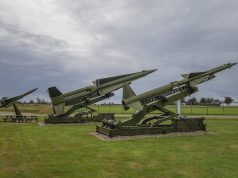
U.S. Defense Secretary Lloyd Austin and allied counterparts spent Wednesday examining maps stretching from Estonia on the Baltic to Romania on the Black Sea. Their instruction to NATO’s supreme commander: present options within weeks for land, air, sea, cyber and space deployments robust enough to deter any Russian move against a member state for the next decade. Stoltenberg listed the desired components: “substantially more forces in the eastern part of the Alliance, at higher readiness, with more pre-positioned equipment and supplies”; additional allied airpower and integrated air-and-missile defense; carrier strike groups, submarines and “significant numbers of combat ships on a persistent basis”; and larger, more frequent exercises. Final decisions will be taken at the Madrid summit in June.
Troop numbers already surging
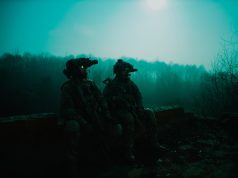
Before Crimea’s seizure, NATO kept no multinational battalions on its eastern flank. Even last autumn the Baltic states and Poland hosted only about 5,000 rotating allied troops. That figure has exploded. The alliance now counts 40,000 personnel under direct NATO command on heightened alert, backed by 150 allied ships at sea and a similar number of aircraft. The United States alone has 100,000 service members in Europe, the first time since 2005 that the Pentagon has crossed that threshold. France, Britain, Germany, Denmark and Canada have all pledged additional armor, jets or special-forces contingents in recent days, and temporary bases from Bulgaria to Slovakia are being upgraded to permanent standards.
Washington drives the shift
President Biden, who will join allied leaders in Brussels next week for an extraordinary NATO summit, has framed the reinforcement as a message to both allies and adversaries. “The United States will defend every inch of NATO territory,” Austin repeated after the ministers’ session. Democrats in Congress have rushed through $13.6 billion in emergency aid for Ukraine and European deterrence, while Republican defense hawks praise the deployment but warn the White House must also accelerate U.S. weapons production lines. Either way, the bipartisan mood on Capitol Hill is to keep Putin boxed in. “Moscow walked away from its commitments under the Act,” the alliance said in a collective statement last month. “This is a terrible strategic mistake, for which Russia will pay a severe price, both economically and politically, for years to come.”
Long-term costs for the Kremlin
Beyond the battlefield, Western officials argue Russia is hemorrhaging strategic use. Every alliance member that borders Russia or Belarus, Poland, Lithuania, Latvia, Estonia, Finland, now hosts either U.S. or multinational NATO battlegroups. Sweden and Finland, long neutral, are openly discussing membership. Meanwhile, the European Union is moving toward joint defense bonds to fund new missiles, drones and cyber capabilities. “The Founding Act is not something that will create problems, or hindrance, for NATO to make necessary decisions,” Stoltenberg noted. Analysts expect the Madrid summit to drop the pledge not to station “substantial combat forces” in the east, a concession Washington pressed for quietly in 1997 to placate a weakened Boris Yeltsin. With Putin’s tanks in Ukraine, that bargaining chip is gone.
The alliance that once hoped to turn Moscow into a partner is now planning for a generational stand-off. Larger bases, pre-positioned tanks, rotating F-35 squadrons and persistent naval task groups will lock in a presence on Russia’s doorstep far heavier than anything imagined during the Cold War. Ukrainians fight on, but the deterrent line meant to keep the war from spreading is already being dug, paid for and manned from Narva to Constanta.