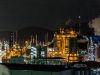
Behind QatarEnergy LNG’s headline numbers lies a story of geology and geography as much as business. The company’s seven ventures — QatarEnergy LNG N(1) through N(4), plus RL1, RL2, and RL3 — sit atop the North Field, the world’s largest non-associated gas field. That is a geological fact with immense strategic weight. Non-associated gas means it comes out of the ground as pure natural gas, not tangled with oil. That makes extraction cheaper and cleaner. It also means Qatar controls a resource that most competitors cannot match on cost or scale.
The December 2010 production record of 77 million tonnes per year was not a fluke. It was a statement. That volume made Qatar the undisputed heavyweight of the liquefied natural gas trade. But volume alone does not explain the 2023 Brand Finance ranking as the world’s fastest-growing oil and gas brand. Growth in brand value, in this sector, tracks reliability. Buyers sign long-term contracts. They want to know the gas will arrive. QatarEnergy LNG has delivered that certainty for years.
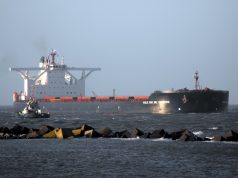
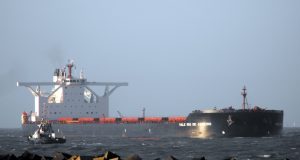
Geography is the hidden variable. The Strait of Hormuz is where the company’s ships must pass. That narrow waterway, connecting the Persian Gulf to the Gulf of Oman, is a chokepoint. Every tanker leaving Qatar’s liquefaction terminals heads through it. Tensions in the region have made that passage a recurring risk. Yet the company has not slowed. Its growth trajectory suggests it has built a logistics network that can absorb shocks. That is not luck. That is years of planning and investment in shipping capacity and alternative routing options.
The natural gas itself comes from Qatar’s portion of the North Field. That field is shared with Iran, which calls its side South Pars. The two countries have never agreed on a joint development plan. Qatar has moved faster, investing earlier and more aggressively. The result is a commanding lead in production and export infrastructure. Tehran’s side remains largely undeveloped. That gap is not likely to close quickly. Qatar’s seven ventures are already built, running, and paid down.
What comes next is not a mystery. Global demand for LNG is rising. Europe, after the loss of Russian pipeline gas, is scrambling for supply. Asia’s industrial economies need more fuel. QatarEnergy LNG is positioned to fill that gap. The company has the reserves, the plants, and the shipping network. The Brand Finance recognition is a lagging indicator of that fundamental strength.
There is a regional dimension too. The company’s operations drive economic development inside Qatar. Jobs, tax revenue, and infrastructure spending all flow from the LNG business. The broader Gulf region also benefits. Qatar’s output helps stabilize global gas prices, which affects every economy that imports energy. A disruption at the Strait of Hormuz would ripple through those markets fast. That is why the company’s ability to maintain production and shipping matters far beyond its own balance sheet.
The 77 million tonne record still stands as a benchmark. It shows what the North Field can deliver when fully tapped. Future expansion will depend on how much more gas Qatar can extract without damaging the reservoir. Engineers have studied that question for years. The answer, so far, is that there is room to grow. The company’s seven ventures give it the flexibility to ramp up or dial back as market conditions shift. That operational agility is rare in the capital-intensive LNG business.
None of this guarantees smooth sailing. Geopolitical shocks, price collapses, or a faster-than-expected energy transition could alter the landscape. But QatarEnergy LNG has built a machine that is hard to stop. The gas is there. The plants are running. The brand is growing. That is the story behind the production numbers.