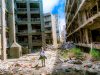
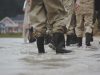
Rescuers are still combing through mud-choked streets and flooded homes in South Korea, where a relentless downpour has now killed at least 17 people. Eleven more are unaccounted for. The numbers are raw, and they will likely rise.
The rain did not stop. It fell in sheets, hour after hour, until rivers swelled over their banks and hillsides turned to slurry. In low-lying neighborhoods, the water rose fast. People who had time got to rooftops. Others did not get out at all.
This is what a broken water cycle looks like when it lands on a densely populated country. The same rain that fills reservoirs and irrigates rice paddies — the same rain that is essential for life — becomes a killing agent when the atmosphere loads it with too much moisture and the ground cannot absorb any more. South Korea is learning that lesson in real time, with body bags.
At stake is not just the immediate toll. The country has built its modern economy on highly concentrated urban corridors, many of them in floodplains or on steep hillsides. When the drainage systems max out, those corridors become chutes for debris and water. The 17 dead are not a freak occurrence; they are a predictable outcome of development patterns that treat heavy rain as an anomaly rather than a recurring hazard.
Rescue teams are working in conditions that are still dangerous. More rain is possible. The missing 11 could be trapped under collapsed structures, swept into drainage culverts, or simply buried in mud that has not yet been dug out. Every hour that passes lowers the odds of finding them alive.
The economic hit will follow. Torrential rains shut down transportation, damage infrastructure, and force evacuations. Businesses that were already struggling after the pandemic now face weeks of cleanup. Insurance claims will pile up. The government will have to divert money from other programs to fund disaster response and reconstruction. That is the concrete cost of a single weather event.
And this is not a rare event anymore. The science is blunt: a warmer atmosphere holds more water vapor. When conditions are right for rain, the rain is heavier. South Korea’s monsoon season has always been dangerous, but the intensity is climbing. The country is now in a position where a “normal” rainy season can kill 17 people and leave 11 missing. That is the new baseline.
There is a deeper risk here, too. The report notes that rain provides water for hydroelectric power and crop irrigation. Those systems depend on predictability. When the rain comes all at once, dams must release water to avoid catastrophic failure — which means they are not storing it for the dry months. Crops that need steady moisture get drowned instead. The balance that makes the water cycle a life-support system is getting knocked sideways.
For the families of the dead and missing, none of this is abstract. They are waiting in shelters or standing at police cordons, hoping for news. The government has not released names yet. That will come later, after the notifications are made. Right now, it is still a search operation.
South Korea will rebuild. It always does. But the question that hangs over every rescue effort is whether the rebuilding will account for the new reality — or whether it will simply pave over the mud and wait for the next storm.