Sudan is now arming its civilians by the thousands. The Sudanese Armed Forces, under General Abdel Fattah al-Burhan, have thrown open military training to ordinary people across the country. These new recruits form the Popular Resistance, a coalition of armed factions fighting alongside the SAF against the Rapid Support Forces.
The RSF already controls northern regions like Gezira state. Reports from those areas describe severe atrocities. That is the direct cause of this civilian surge. People are not joining a cause from a distance. They are taking up arms because the RSF is in their towns, and they have watched what happens next.
This is not a small development. The conflict that began on 15 April 2023 was initially a power struggle inside Sudan’s military structure. Two generals, two armies, one country. But the Popular Resistance changes the character of the war entirely. It introduces mass mobilisation. It turns a military fight into a societal one.
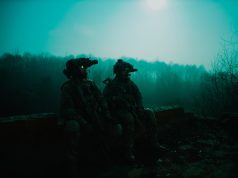
The resistance lacks a formal arsenal. That is a plain fact. But it receives direct support and military training from the SAF. That support has already trained thousands of civilians. These are not professional soldiers. They are people from towns and cities who are being prepared for combat. The stated goal is to defend against the RSF’s aggressive expansion.
Public figures and government officials have stepped in to support these training and armament initiatives. That matters. It shows a united front, at least on paper. But unity on paper and unity under fire are different things. The Popular Resistance is untested at scale.
What is at stake is straightforward. If the RSF continues its expansion, the atrocities in Gezira state will repeat elsewhere. The civilian armament is a direct response to that threat. But arming civilians carries its own risks. Trained fighters with weapons and a cause do not always disband when the war ends. Sudan has seen that pattern before.
The Popular Resistance operates under the banner of “national dignity.” General al-Burhan leads the SAF and stands at the head of this coalition. The coalition aims to unite various political and social groups. Whether that unity holds under pressure is an open question. Wars fracture alliances. They also create new ones.
For now, the numbers are on the side of mobilisation. Thousands of civilians are training. The SAF is providing the instruction and the weapons. The RSF holds territory and commits atrocities. The Popular Resistance is the answer the SAF has chosen.
The war is no longer just between two armed forces. It is between an army backed by armed civilians and a paramilitary force that has terrorised whole regions. That is the reality on the ground. And that reality is why this matters. The conflict has widened. More people are now directly involved, either as fighters or as victims. The line between soldier and civilian has blurred. In Gezira state, it has disappeared entirely.
The Popular Resistance may not have a formal arsenal today. But every day of training puts more weapons in civilian hands. Every atrocity in the north drives more people to the training camps. The RSF’s violence is recruiting for the SAF. That is the cycle now turning in Sudan.