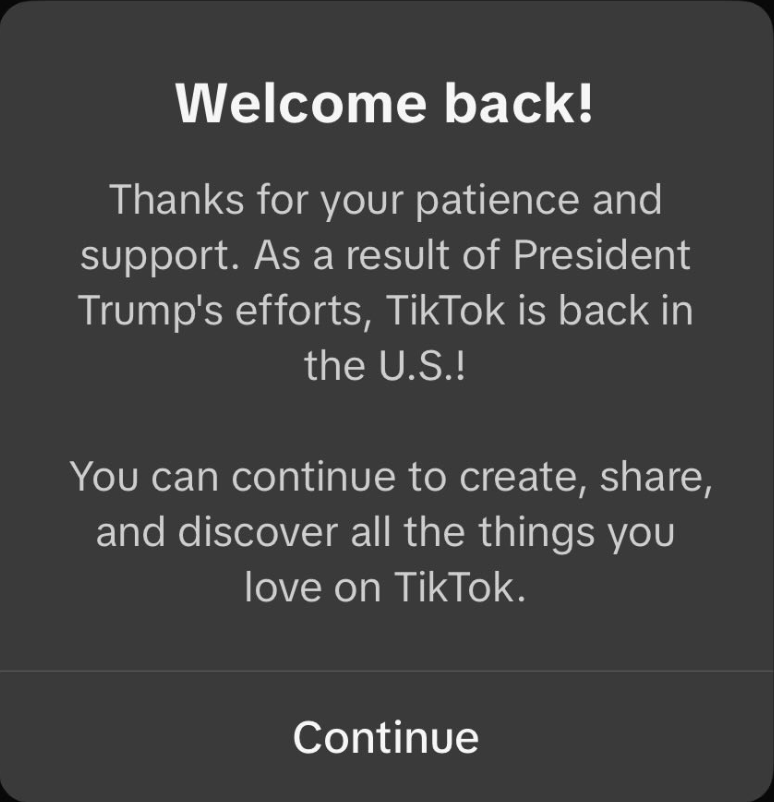
TikTok, the popular social media platform, temporarily suspended most of its services in the United States on January 19, 2025, as the Protecting Americans from Foreign Adversary Controlled Applications Act went into effect. This move marked a significant development in the ongoing conversation about the role of foreign-owned social media platforms in the US. The suspension was a direct response to the new legislation, which aims to regulate the use of certain foreign-controlled applications in the country.
As the day unfolded, TikTok restored its services, but the app remained unavailable for download on the App Store and Google Play in US markets. This partial restoration of services suggests that the company is working to comply with the new regulations, while also ensuring that its users can continue to access the platform. The temporary suspension and subsequent restoration of services have raised questions about the future of social media in the US and the impact of government regulations on the industry.
Social media platforms like TikTok have become an integral part of modern online life, enabling users to create and share content, participate in social networking, and connect with others across the globe. The features that make these platforms so popular, such as user-generated content, online profiles, and social networking capabilities, have also raised concerns about data privacy, security, and the potential for foreign interference. As the US government continues to grapple with these issues, social media companies are being forced to adapt and evolve in response to changing regulations and public expectations.
The Protecting Americans from Foreign Adversary Controlled Applications Act is a significant piece of legislation that aims to address some of these concerns. By regulating the use of foreign-controlled applications, the government hopes to protect American users from potential security risks and data breaches. While the impact of this legislation on TikTok and other social media platforms is still unclear, it is evident that the industry is on the cusp of a major shift. As companies navigate this new regulatory landscape, they will be forced to prioritize transparency, security, and user privacy in order to maintain the trust of their users and comply with government regulations.
A New Era for Social Media
As the social media landscape continues to evolve, it is likely that we will see a new era of innovation and growth. Companies that are able to adapt to changing regulations and public expectations will be well-positioned to thrive in this new environment. The temporary suspension of TikTok’s services in the US is a reminder that the social media industry is not immune to government regulations and public concerns. However, it also presents an opportunity for companies to rethink their approach to data privacy, security, and user engagement, and to develop new features and services that meet the changing needs of their users.
Looking ahead, it is clear that the future of social media will be shaped by a complex interplay of technological innovation, government regulation, and public expectations. As companies like TikTok navigate this new landscape, they will be forced to balance their desire for growth and innovation with the need to prioritize user privacy, security, and transparency. While the road ahead is uncertain, one thing is clear: the social media industry is on the cusp of a major transformation, and the companies that are able to adapt and evolve will be the ones that thrive in this new era. With the Protecting Americans from Foreign Adversary Controlled Applications Act now in effect, the stage is set for a new era of innovation and growth in the social media industry, one that will be shaped by a delicate balance of technological innovation, government regulation, and public expectations.