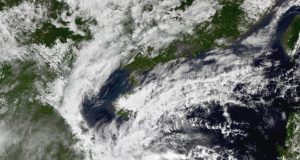
Typhoon Mawar is barreling toward Guam with sustained winds of 282 km/h. That is 175 mph. Category 5 strength. The island, a U.S. territory of 168,801 people, sits directly in the path.
This storm is not a surprise. Guam sits in the western Pacific Ocean, in Micronesia. It is the largest and southernmost of the Mariana Islands. It is also the most exposed. Every typhoon season, the island braces. But Mawar is different. Winds at this speed tear roofs off concrete buildings. They snap power poles. They turn debris into projectiles.
The territory spans 210 square miles. That is 540 square kilometers, or 130,000 acres. Population density is high. That density magnifies the danger. When a storm this powerful hits a small, crowded island, the damage compounds. There is no room for the storm to dissipate. It hits everything at once.
Guam is an organized, unincorporated territory of the United States. That means federal resources exist, but they are far away. Supply lines run across the Pacific. In the immediate hours of a typhoon, residents are on their own. Authorities have urged people to take shelter. They have told them to stock food, water, and essentials. That advice is standard. It is also critical.
The capital, Hagåtña, will take a direct hit. So will Dededo, the most populous village. The Chamorros, the island’s largest ethnic group, are preparing. They have weathered storms before. But Mawar is not a typical typhoon. The wind field is wide. The rain will be heavy. Infrastructure — homes, businesses, power grids, water systems — will be tested.
The Northern Mariana Islands are also in the storm’s path. Saipan, Tinian, and Rota. Combined population numbers are lower than Guam’s, but the risk is the same. These islands lack the same level of infrastructure. Recovery there will be slower.
What comes next is the real question. Typhoons of this magnitude do not just pass. They reshape the landscape. They break the economy. Guam depends on tourism and the U.S. military presence. Both will grind to a halt. Repairs will take weeks, possibly months. The federal government will have to move quickly. FEMA will deploy. But logistics in the Pacific are brutal. Airports may be damaged. Ports may be unusable.
The storm is a test of resilience. The people of Guam have a strong sense of community. That matters. But community does not stop a 175 mph wind. It does not rebuild a power grid overnight. The storm will reveal weaknesses in the territory’s infrastructure. It will also reveal the limits of disaster preparedness on a small island.
Authorities have urged residents to stay indoors. Avoid travel. These are the right calls. But for many, staying indoors means riding out a storm that could destroy their home. The psychological toll is real. The physical danger is immediate.
Typhoon Mawar is not a weather event. It is a force. It will pass, but its effects will linger. The islands will recover. They always do. But the cost — in money, in time, in lives disrupted — will be high.