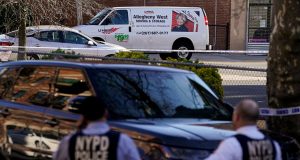
Eleven people are hurt and one firefighter is dead after an explosion tore through a home in Sterling, Virginia on February 16, 2024. That dead firefighter is the single hardest fact in this story. Everything else — the injured, the investigation, the community’s grief — orbits that loss.
The explosion did not just injure people. It killed a first responder who was doing the job. Firefighters run toward the flames. That is the cliché. The reality is that sometimes the flames run back, or the building falls, or the gas line blows before anyone can get clear. In Sterling, that reality ended a life. Eleven others are now patients, their conditions being watched. Some of those injured are firefighters. Some may be civilians. The report does not specify which, and that distinction matters less than the number itself. Eleven is a lot of people to pull from one house explosion.
The cause of the blast is not yet known. An investigation has started. That is standard procedure after an event like this, but standard procedure does not make it any less grim. Investigators will sift through debris, check gas lines, interview witnesses. They will try to find a reason. Sometimes there is one. Sometimes there is not. Either way, the dead firefighter does not come back.
This is the kind of incident that gets called a reminder. It is a reminder that firefighters are not invincible. They are trained. They are equipped. They handle fires, hazardous materials, medical calls, car wrecks. The training is rigorous and ongoing, because the job changes. But no amount of training guarantees safety when a house explodes. The danger is part of the work, baked into the job description. That does not make it easier to accept when a firefighter dies.
The community in Sterling is left mourning. That is a broad phrase — mourning — but it covers a lot of ground. Families are grieving. Fellow firefighters are grieving. Neighbors who saw the explosion or heard the sirens are grieving too. The impact of a death like this does not stay inside the firehouse. It spreads. It settles into the town. People will ask each other what happened, and nobody will have a full answer for a while.
The injured are still receiving medical attention. Their conditions are being monitored. That is the present tense of this story — the hospital rooms, the doctors, the waiting. The past tense is the explosion itself. The future tense is the investigation, the funerals, the long process of figuring out what went wrong and how to stop it from happening again.
Firefighters face unique challenges. That is not a throwaway line. They go into situations where the information is incomplete and the pressure is high. They have to make fast decisions, and sometimes those decisions are wrong, and sometimes they are right but the building still collapses. The skill and training that got them to the scene could not get them all out unharmed. One did not get out at all.
This was a house explosion in a suburban town. It could have been worse. That is a cold comfort, but it is true. Eleven injured and one dead is not the worst possible outcome. It is still a terrible outcome. The dead firefighter gave their life in the line of duty. That phrase gets used a lot. It is accurate here. It does not make the loss any less raw.