A New Strategic Partnership Emerges in Southeast Asia
More than three decades after the United States withdrew its major military installations from the Philippines, Washington and Manila are moving to reverse that decision in response to growing security challenges. On February 2, the two longtime allies announced a significant expansion of American access to Philippine territory. This agreement allows rotating batches of US forces to use four additional military camps alongside five existing local bases. Under the framework of the 2014 Enhanced Defense Cooperation Agreement, construction projects funded by the United States are accelerating rapidly to build barracks, warehouses, and other essential facilities. These developments aim to accommodate a sizable number of visiting troops as part of a broader strategy to fortify an arc of military alliances across Asia. The primary motivation for this shift is the need to counter perceived threats from an increasingly aggressive China in the South China Sea.
Strategic Deterrence Against Regional Aggression
The specific locations chosen for these new access points are designed to give the US military a robust presence needed to act as a strong deterrent against Chinese aggression. The South China Sea remains a flashpoint where Beijing, Manila, and four other governments have experienced increasingly tense territorial rifts. Furthermore, Beijing views Taiwan as an intrinsic part of its territory and has indicated it would use force if necessary to bring the island under its control. Andrea Chloe Wong, a political scientist based in Manila, noted that the strategic placement of these camps ensures the US military maintains the presence required to protect regional interests. During a recent visit to Manila, US Defense Secretary Lloyd Austin emphasized the importance of this move. He stated that while Washington is not attempting to reestablish permanent bases in the traditional sense, the agreement to increase its military presence under the Enhanced Defense Cooperation Agreement represents a major issue for both nations.
Modernizing Alliances and Humanitarian Aid
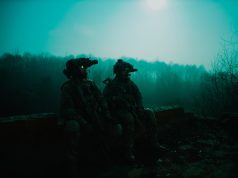
According to Secretary Austin and his Philippine counterpart Carlito Galvez Jr., the visiting American military personnel will play multiple roles beyond simple stationing. Their duties include participating in greater joint combat-readiness exercises with Filipino forces, assisting in providing quick disaster relief, and pushing efforts to support the modernization of Manila’s armed forces. At a news conference held in Manila, Austin highlighted the vital nature of these efforts. He remarked that this commitment is essential as the People’s Republic of China continues to pursue what he described as unlawful claims in the West Philippine Sea. The US military expansion aims to strengthen the alliance and ensure that both nations can respond effectively to regional instability. This cooperation includes supporting modernization initiatives that help the Philippines maintain a capable defense posture against external pressures.
Economic Impact and Local Perspectives
The news of the Philippine government’s decision to permit an expanded American military presence near the former US Navy base in Subic has sparked mixed reactions within the local community. The area around Subic is now a thriving commercial freeport and tourist destination northwest of Manila, which once saw thousands of US sailors injecting money, life, and hope into the nearby city of Olongapo. Rolen Paulino, the administrator of the Subic Freeport, claimed that the government has not yet informed him that the former US naval post has been flagged as a prospective location for incoming US forces. However, Paulino acknowledged that a reactivated US military presence would increase employment and boost freeport income. This economic boost is particularly critical at a time when many Filipinos and companies are still working to recover from two years of Covid-19 lockdowns and a recession brought on by coronavirus outbreaks. Regarding the potential influx of troops, Paulino remarked that he regards them as tourists who will contribute to the rehabilitation of the economy.
Diplomatic Tensions and Domestic Concerns
The expansion of US forces in the region has not gone unnoticed by Beijing. A spokesman for the Chinese Foreign Ministry named Mao Ning stated that the US military’s expansion is raising tensions and endangering peace and stability. At a press event in Beijing on February 2, Mao warned reporters that regional countries need to be watchful and avoid being bullied or manipulated by the United States. Domestically, the agreement faces scrutiny regarding the Philippine Constitution, which forbids foreign forces from establishing permanent bases but permits temporary entry under security agreements like the 1998 Visiting Forces Agreement. This previous agreement allowed the deployment of numerous American forces in the southern Philippines to support Filipino forces fighting the Abu Sayyaf group. Despite these benefits, internal hostility toward the US presence persists. The shooting of a Filipina transgender woman by a US Marine in 2014 has been denounced by left-wing organizations as neo-colonialism, according to Wong. Additionally, Manuel Mamba, the governor of the northern Cagayan province, has vowed to oppose such an American military presence. Mamba warned that it would be extremely risky for the region if the Philippines were targeted by nuclear weapons in a conflict over Taiwan. He added that through the Americans who will be present, one cannot dispel anyone’s assumption that the Philippines possesses nuclear capabilities.